Steerprotocol: issuer settlement in practice
UpdatedThrough Secondary Market Hook, Steer Protocol links eligible trades with pool liquidity and a separate issuer-settlement route. Issuer terms and available capacity govern access to that route.
- Market participants
- Tokenized-asset issuers, trading venues, and tokenization platforms.
- Market operator
- The trading venue configures issuer connections, liquidity strategies, and the controls its market needs.
Pool liquidity and issuer capacity
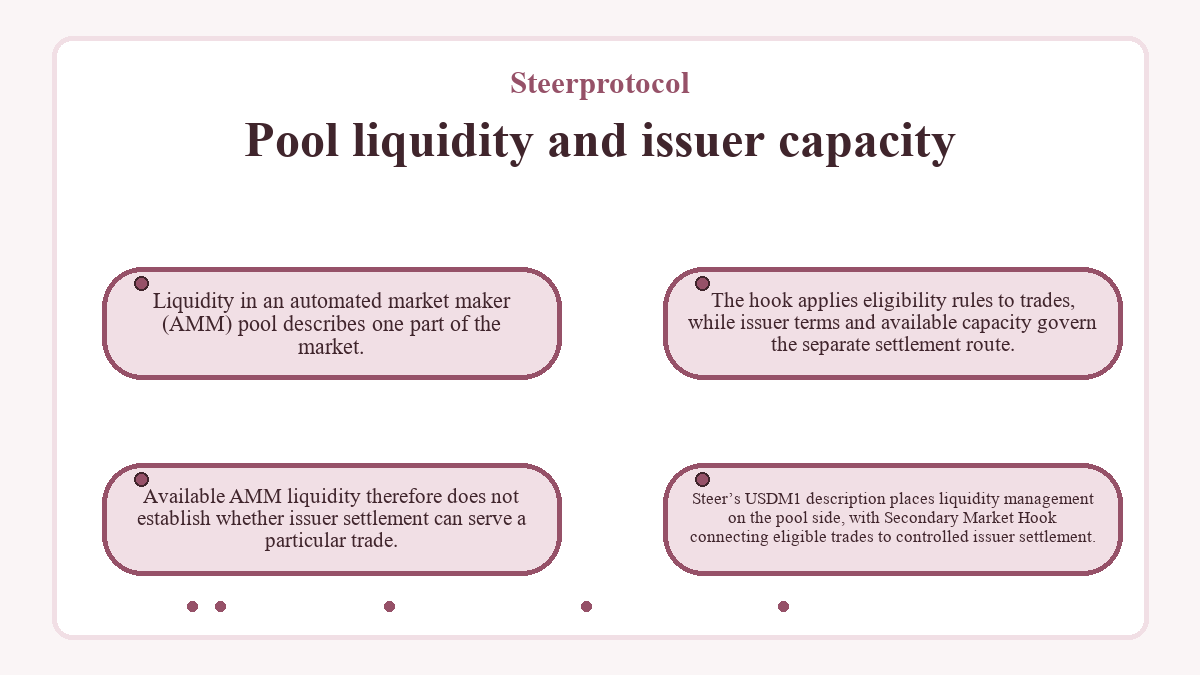
Liquidity in an automated market maker (AMM) pool describes one part of the market. The hook applies eligibility rules to trades, while issuer terms and available capacity govern the separate settlement route. Available AMM liquidity therefore does not establish whether issuer settlement can serve a particular trade.
Steer’s USDM1 description places liquidity management on the pool side, with Secondary Market Hook connecting eligible trades to controlled issuer settlement.
Hypothetical case: Liquidity without issuer capacity
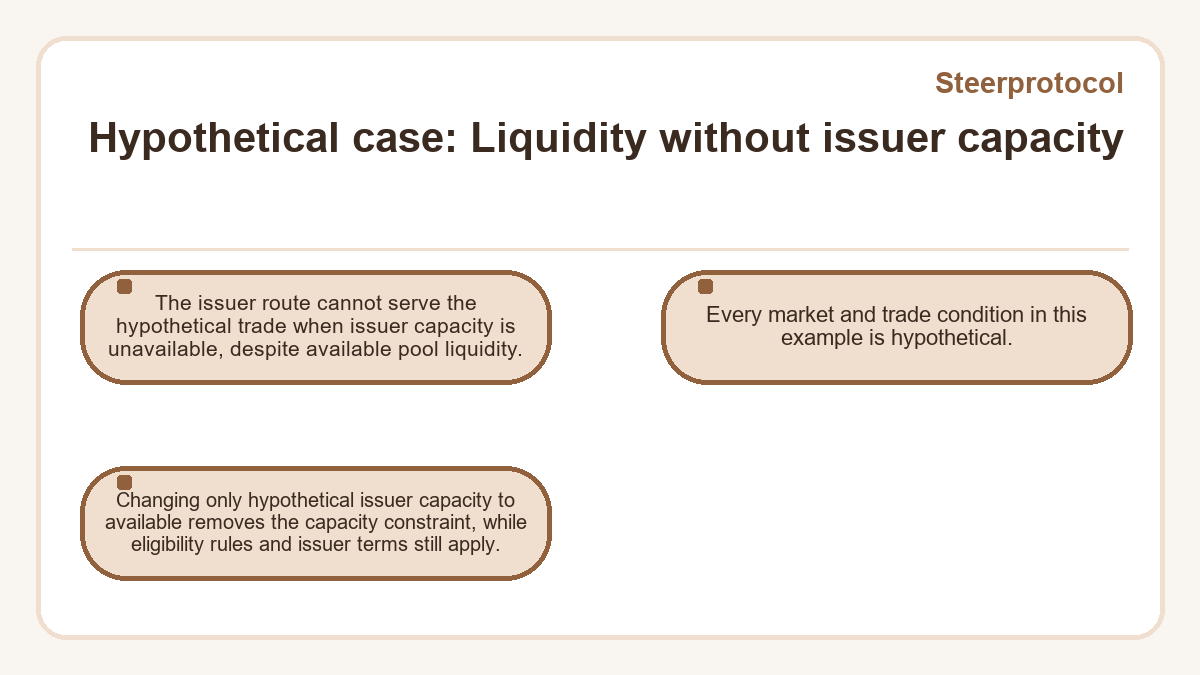
The issuer route cannot serve the hypothetical trade when issuer capacity is unavailable, despite available pool liquidity. Every market and trade condition in this example is hypothetical.
- Market configuration
- Pool liquidity is available, and a Secondary Market Hook connection is configured.
- Trade eligibility and issuer terms
- The proposed trade meets eligibility rules, and issuer terms permit use of the settlement route.
- Issuer capacity
- No issuer-settlement capacity is available for this trade.
Changing only hypothetical issuer capacity to available removes the capacity constraint, while eligibility rules and issuer terms still apply.